
Orthopaedics and Musculoskeletal Medicine
From the red flag to discharge - the clinical approach to musculoskeletal pain.
146 pages in 13 chapters, from the low back to nerve entrapment. Each chapter is made of units, and each unit carries a clinical account in Hebrew with the English or Latin term beside it, a card for every physical examination manoeuvre, the numbers that decide management in their own column, a step-by-step algorithm, a pitfalls-and-red-flags box, and exam-style questions with an explanation for every distractor.
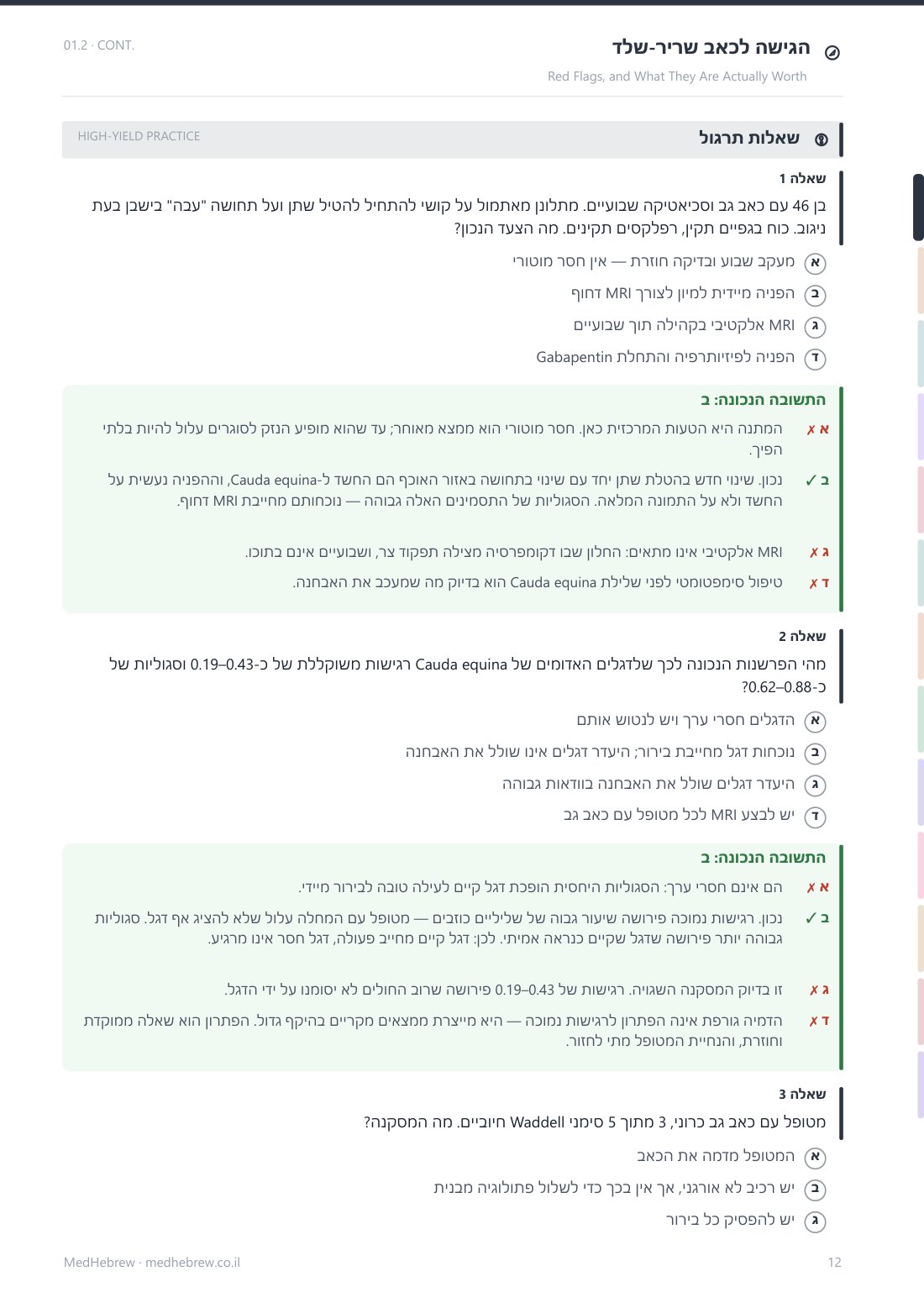
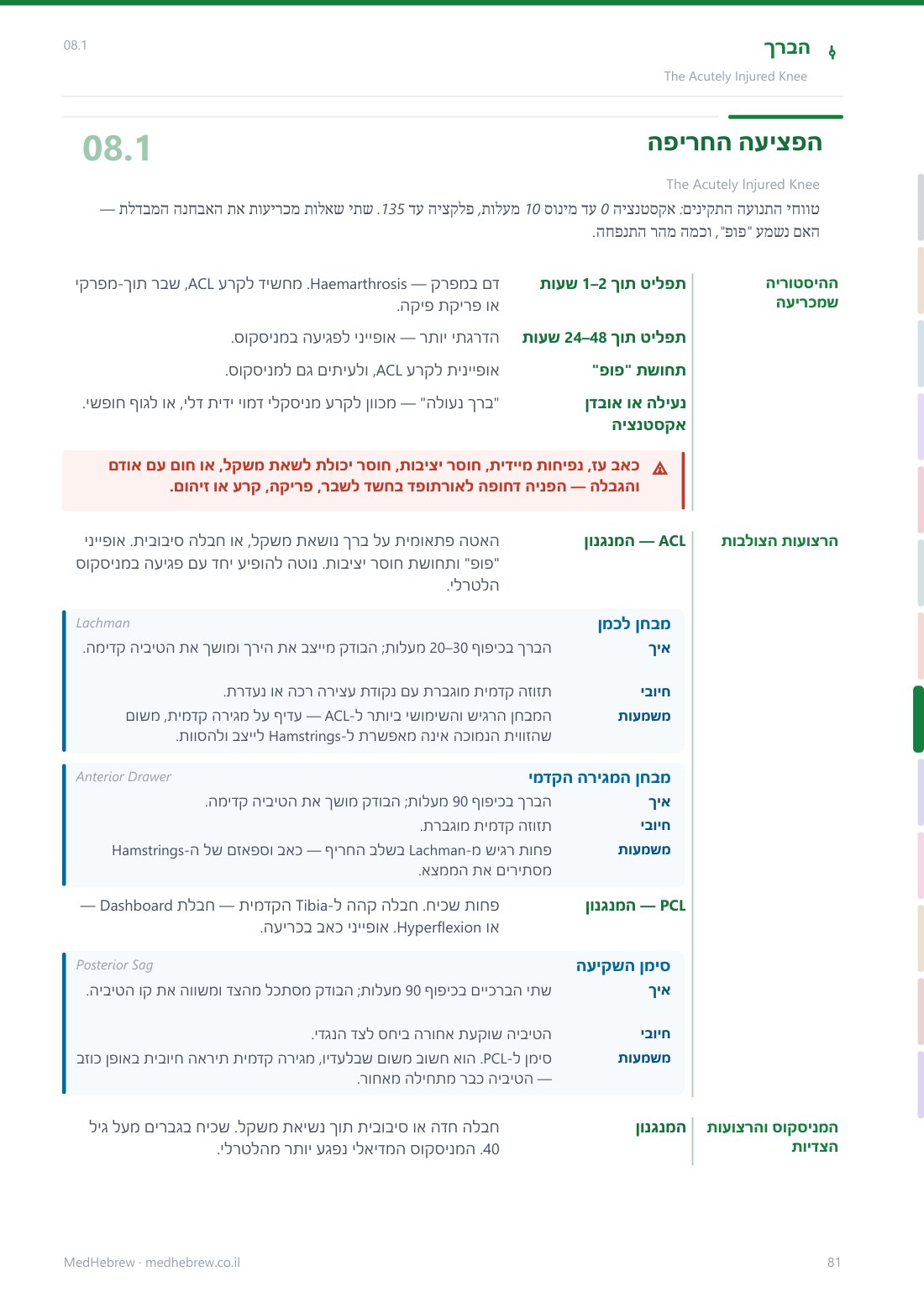
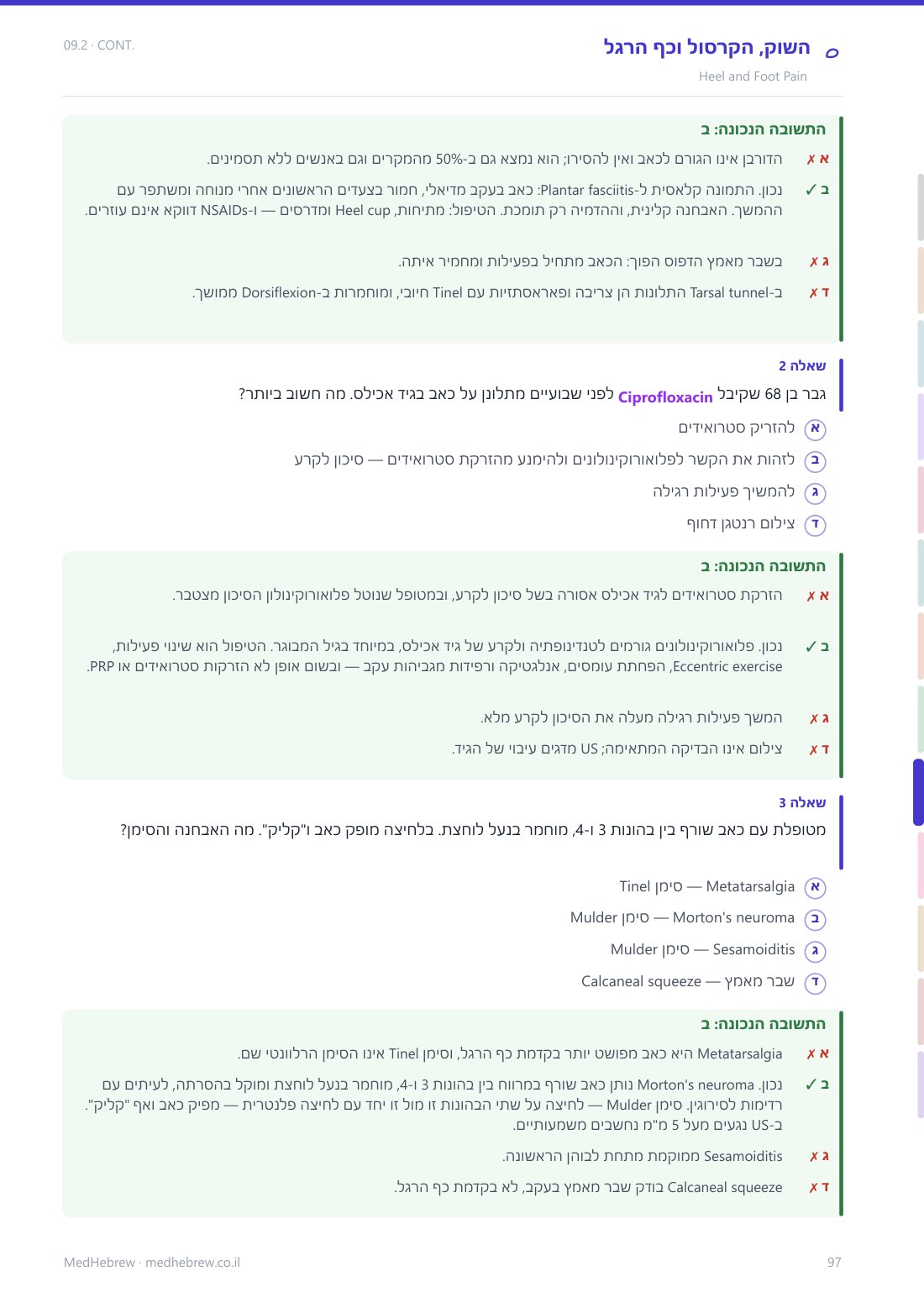
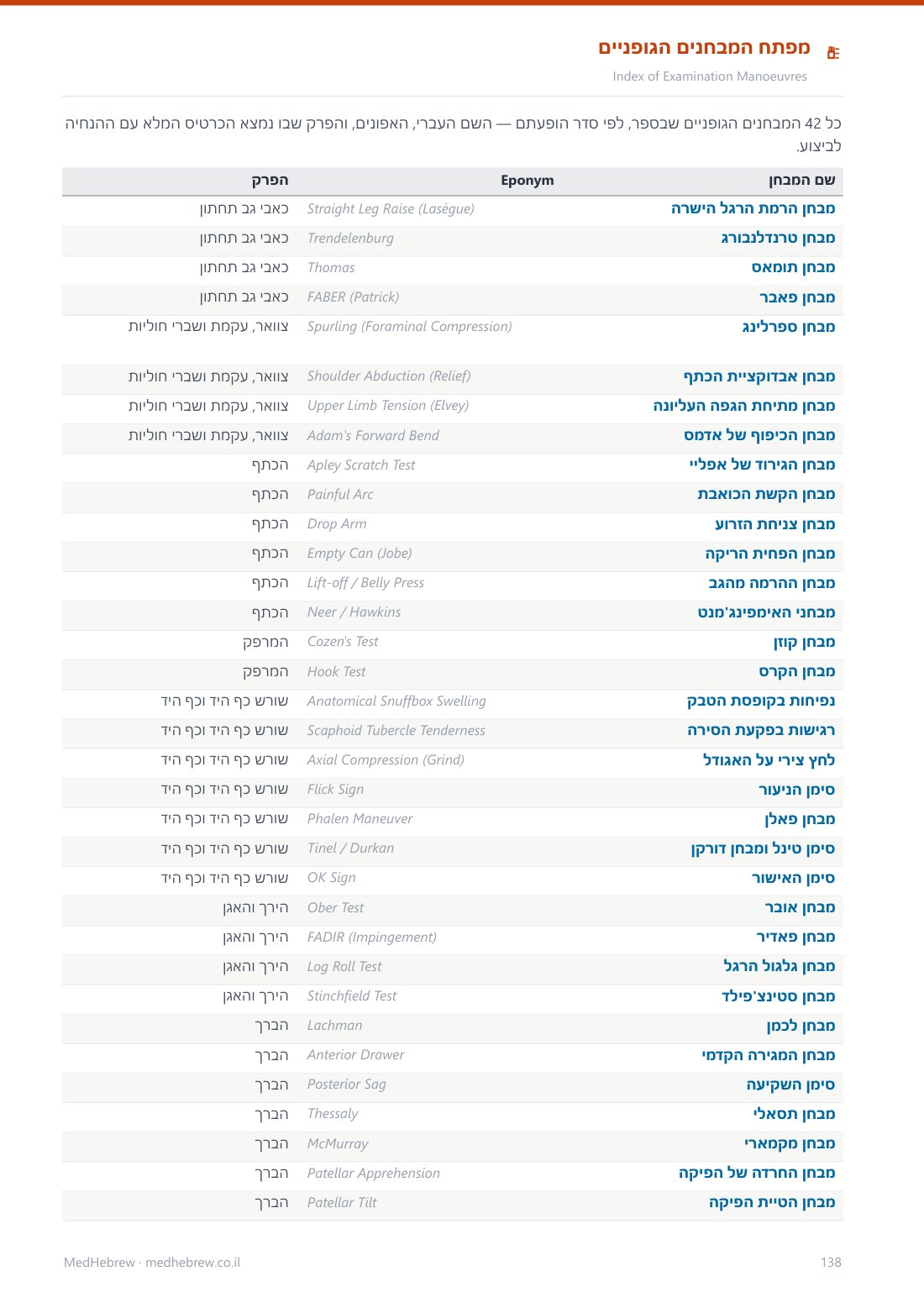
Four pages from the book - the imaging rules, examining the knee, the child’s hip, and the manoeuvre index.
42 manoeuvres, each as a card
Lachman, Thessaly, Ortolani, Phalen, Froment, Spurling and more - each with its own card: exactly how it is performed, what counts as positive, and how far the answer can be trusted. An index at the back leads from any manoeuvre to its card.
The imaging rules, whole
Ottawa Ankle, Ottawa Knee, Canadian C-Spine and NEXUS are reproduced in full, because a rule missing one criterion is no longer the rule - and that is exactly where the sensitivity it was built for breaks.
Pitfalls and red flags
A dedicated box closes every unit: why red flags are specific but not sensitive, why a present pulse does not exclude compartment syndrome, and why knee pain in an adolescent is the hip until proven otherwise.
One-time purchase. After payment we email you a personal PDF of the book - readable offline, with search and bookmarks for every chapter - plus an access code to read it online in your account, from any device.
By Team MedHebrew · about us →What do I get?
A 146-page book in 13 chapters: the approach to musculoskeletal pain, low back pain, neck and deformity, shoulder, elbow, wrist and hand, hip and pelvis, knee, leg ankle and foot, paediatric orthopaedics, overuse injury, bone infection and tumour, and nerve entrapment. At the back: a "what cannot wait" card, an index of all 42 manoeuvres, and a glossary of 193 terms in Hebrew and English.
What is it based on?
The orthopaedics chapter of the 2025 Israeli family medicine summary by Dr Natalie Lerner, pages 406–446, with the validated imaging decision rules and the Kocher criteria taken from their own sources rather than paraphrased, and the classifications every reader is expected to know - Salter-Harris, Garden, Cobb and Ottawa - set out in full.
Who is it for?
Family physicians, interns, residents and medical students in the clinical years. It is written from the primary-care point of view - what can be managed in the community, when to image and when to refer - in Hebrew, with the English or Latin term beside every Hebrew one.
What is an "examination card"?
Orthopaedics is taught as a list of names, and a name without the hand movement beside it is worth nothing. So every manoeuvre in the book gets a card: the Hebrew name, the eponym, exactly how it is performed, what counts as positive, and what the result actually means. That makes the book work at the bedside and not only at the desk.
How do I get access after paying?
After payment we email you an access code. Create a free account (or sign in), enter the code - and the book opens in your account.
Can I download the file?
Yes. You receive a personal PDF by email - with search, bookmarks for every chapter and unit, and the ability to read offline or print. Your name and email are printed on every page so the copy stays yours. You can also read the book online in your account.
Need help?
Email medhebrew@gmail.com or reach us through the MedHebrew Telegram channel - we are glad to help.
This book is study material. It is not an institutional guideline, not a protocol, and not a substitute for clinical judgement or orthopaedic consultation. Guidance changes, particularly on imaging and on the management of low back pain - verify against the current guideline and your institution’s policy before clinical use.
More from MedHebrew
Every book comes as a personal PDF and opens in your account.
Digestive System Surgery
Licensing-exam preparation - oesophagus to spleen, with the classifications and the traps.
One-time purchaseClinical Atlas of Antibiotic Therapy
What to give, why, for how long - and what comes back to you afterwards.
One-time purchaseAnatomy Atlas
An illustrated anatomy atlas of the human body.
One-time purchasePsychiatry Guide
A practical psychiatry guide in medical Hebrew.
One-time purchaseCommon Diseases Handbook
The unit doctor’s pocket book - routine, emergency and field medicine.
One-time purchase